CAT 1CLEAN
Clean water
Supply lines, a burst pipe, an overflowing sink or tub. No contaminants at the source.
→ Often dried in placeRestorationResponder is one national line for water, fire & mold emergencies — routed to a vetted local crew in minutes, with 24/7 mitigation and full property recovery.
A water loss doesn't wait. This is the timeline restoration crews race against — and the reason a fast response is the single biggest factor in how much of your property survives.
Clean water wicks into flooring, baseboards, and wall cavities within the first hour.
Drywall and trim absorb and warp, furniture stains, and metal begins to tarnish.
With moisture and warmth, microbial growth can start — the loss shifts from water to mold.
Sustained saturation weakens framing and subfloor, and odor sets into the building.
What began as extraction becomes gut-and-rebuild — and a harder, slower recovery.
Restoration is a race against the clock. Call the moment it happens — (800) 555-0134.
Burst pipes, floods, leaks, storm intrusion.
House fires, smoke, soot, odor.
Black mold, remediation, inspection.
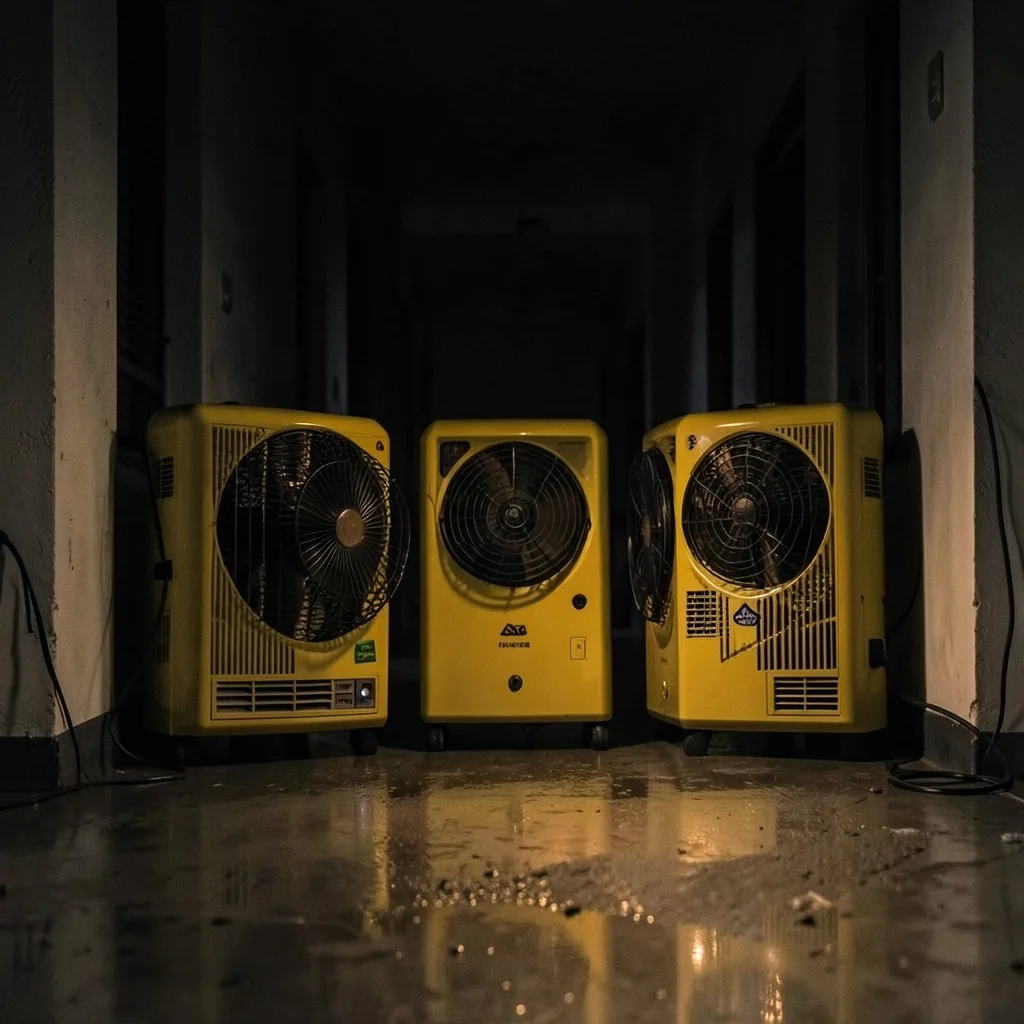
"Looks dry" isn't dry. Water hides in framing, subfloor, and wall cavities, and the only way to know a structure is safe is to measure it. Restoration crews track moisture with meters and psychrometric readings and run air movers and dehumidifiers until the numbers hit a documented dry standard — the same evidence your insurer expects. That discipline is the line between a clean recovery and a callback for mold six weeks later.
The category of water drives the entire response — what can be saved, what has to go, and how the space is decontaminated. And a loss gets worse the longer it sits: clean water left standing degrades to gray, then black.
Supply lines, a burst pipe, an overflowing sink or tub. No contaminants at the source.
→ Often dried in placeAppliance discharge, sump overflow, or clean water that has sat and picked up contaminants.
→ Porous materials often removedSewage backups, rising floodwater, or any water grossly contaminated with bacteria.
→ Decontamination requiredMost property emergencies trace back to a short list of causes. Whatever started it, the same network of crews handles the cleanup and the rebuild.
A split supply line can release hundreds of gallons an hour — the classic winter emergency in the freeze belt, often discovered too late.
Water heaters, washing machines, dishwashers, and toilet supply lines fail without warning and flood the rooms around them.
Wind-driven rain, roof breaches, storm surge, and rising water push contaminated water into the structure from outside.
The most common house fire — and even a small one leaves smoke and soot residue through rooms the flames never touched.
Faulty wiring, overloaded circuits, and failing appliances start fires inside walls that spread fast and demand full securing.
Out West, wildfire brings structural fire, heavy smoke intrusion, and the water damage left behind by firefighting — often at once.
A slow drip behind a wall or under a sink feeds mold for weeks before anyone notices the musty smell or the staining.
Across the humid Southeast, warm damp air in basements, bathrooms, and crawl spaces is all mold needs to take hold and spread.
The most preventable cause: a flood or leak that was mopped up but never dried to standard, so mold returns within weeks.
Routing runs densest where water, fire, and mold hit hardest — the Southeast, California, the Mountain West, and the freeze belt. One call finds a crew that already works your area.

Crews stage extraction and drying the moment they arrive — because the faster mitigation starts, the more of your property survives.
(800) 555-0134 →
Call or describe the damage — water, fire, or mold, and your ZIP. No forms to fight through in a crisis.
You're matched with an available, IICRC-standard restoration contractor who works your area.
The crew extracts, dries, secures, or contains — stopping the loss from spreading any further.
The same crew rebuilds and documents everything for your insurance claim, start to finish.
In an emergency, the last thing you want is a phone tree of "we can fit you in next week." Here's the difference one national line makes.
Mitigation stops the loss; restoration brings it back. The same crew carries your property from the worst day to move-back-in.


Most water and fire losses are insurable events, and restoration crews document damage the way adjusters expect. Our guides walk the claim process, mitigation versus rebuild, and what to ask before work begins.
General information, not insurance advice — we don't negotiate claims (that's a licensed public adjuster). Sourced to the Insurance Information Institute (III.org).
Indoor mold should be removed and the moisture source fixed, or it returns. Larger areas and hidden growth call for professional containment. We summarize the public-health guidance and link to the primary sources.
Educational, sourced to the EPA and CDC — it is not medical advice. For symptoms, consult a physician.
Make sure everyone is safe and the property is safe to enter. For water, stop the source if you can do so safely (shut the main). For fire, wait for the fire department to clear the structure. Then call for emergency mitigation — the faster a crew starts extraction, drying, or securing the building, the less secondary damage sets in. Document everything with photos before cleanup begins.
For an active emergency, call for mitigation first — most policies actually require you to take reasonable steps to prevent further damage, and a restoration crew can stop the loss from spreading while you open a claim. You can notify your insurer in parallel. Restoration companies routinely document the loss and work alongside adjusters. This is general information, not insurance advice — your policy and state rules control.
Restoration is an emergency trade, so crews are dispatched around the clock for water and fire losses. When you call, we route you to an available local contractor — often for same-day arrival. Response time depends on your location and current demand, but the goal is to get a crew on site as quickly as possible.
The independent contractors we connect you with handle emergency mitigation (extraction, drying, securing, containment) and can carry the project through full restoration and rebuild — drywall, flooring, paint, and reconstruction — so you deal with one crew from the first call to move-back-in.
The EPA and CDC note that indoor mold can cause allergy-type symptoms in some people and should be removed, and that any water problem feeding it must be fixed or it returns. Larger areas of growth, hidden mold behind walls, and contamination in HVAC systems are best handled with professional containment and HEPA methods. We are not a medical provider — for health concerns, consult a physician.
Pricing depends on the category of loss, the affected area, and the scope of drying or rebuild — and each contractor sets its own rates, so we do not quote prices here. Getting matched with a crew is free, and the contractor gives you the estimate directly. Our editorial cost guides explain what drives restoration pricing in detail.
Mitigation is the emergency phase — stopping the loss from getting worse through extraction, drying, securing, and containment, usually in the first hours and days. Restoration is the rebuild phase that follows: replacing drywall, flooring, and finishes to return the property to its pre-loss condition. The same crew typically handles both, so you move from emergency to move-back-in with one contractor.
It varies with the size and category of the loss. Structural drying for a contained water event often runs three to five days of monitored equipment; a full rebuild after a serious fire can take weeks to months. The crew gives you a timeline after the initial assessment — and starting mitigation quickly is what keeps the overall project as short as possible.
No. Getting matched is free and there is no obligation. You are connected with an available, vetted local restoration contractor who provides an assessment and estimate; the decision to proceed is entirely yours.
Routing covers all 50 states and nearly 26,000 cities, with the densest crew availability in the metros where water, fire, and mold losses are most common — the Southeast, California, the Mountain West, Texas, and the northern freeze belt. Enter your ZIP when you call or submit the form and we route to a contractor who works your area.
What you do in the first hour decides how much of your property survives — no long read required.
Damage hides. These are the tells that it's time to get a crew out before a small problem becomes a rebuild.
A few words you'll hear from a crew or an adjuster — in plain English, so you know exactly what's happening to your property.
The emergency work that stops a loss from getting worse — extraction, drying, securing, and containment — done in the first hours and days.
Removing and correcting the damage itself, most often used for mold: containment, HEPA filtration, removal, and verifying the result.
Category grades how contaminated the water is (clean, gray, black); class grades how much material is wet and how hard it is to dry.
The science of drying — tracking temperature, humidity, and moisture readings to dry a structure to a documented standard, not a guess.
Sealing off a work area with sheeting and negative air pressure so mold spores or soot don't spread to clean parts of the home.
The industry standards of care for water damage (S500) and mold remediation (S520) that reputable crews are trained and certified to.
RestorationResponder is not a restoration company — it’s the fast way to reach one. When water, fire, or mold hits your property, you make one call and we route you to an independent, local, IICRC-standard restoration contractor who works your area and can be on site fast. You deal directly with that crew; we’re the connection that spares you from calling around while the damage spreads.
Restoration is a race against the clock. Water wicks into framing and subfloor within hours, soot keeps etching surfaces until it’s cleaned, and standing moisture is exactly what mold needs to take hold. The single biggest factor in how much of your property survives is how fast a qualified crew starts mitigation — which is the whole reason this line exists.
Coverage spans all 50 states and nearly 26,000 cities, concentrated where water, fire, and mold losses hit hardest. Every crew documents the loss the way insurance adjusters expect. Want the detail? The water, fire, and mold hubs and the claims & recovery guides go deep on process, timelines, and what drives cost.
No fake reviews, no invented ratings, no pressure. Getting matched is free with no obligation, and the contractor gives you the estimate directly. This site is general information — not insurance, medical, or legal advice.